
Consumer Products & Retail
Some of the world's biggest and best-known retailers and consumer brands retain Arnold & Porter because our attorneys act as trusted strategists for regulatory, litigation, and transactional matters, always giving attention to the broader context of industry, government, and consumer developments. Our edge also comes from deep experience serving clients in this industry in a wide range of matters including product development, governmental enforcement defense, state and federal compliance strategies, consumer- and competitor-based challenges, class action defense, legislative and public policy matters, strategic and financial transactions, licensing, supply chain, and complex scientific issues.
-
Multi-Disciplinary Experience: Our regulatory, transactional and litigation attorneys work collaboratively to provide practical, well-informed representation and risk-mitigation counseling for our clients.
-
Deep and Broad Industry Experience: Our industry-focused legal services are bolstered by our deep bench of regulatory specialists who advise across the range of regulatory agencies: FDA (food & beverages, cosmetics, dietary supplements, OTC products), CPSC (appliances, clothing/textiles, electronics, home goods, recreational/children's products) and EPA (pesticides, anti-microbials).
-
Full Range of Clients: Our clients include manufacturers and traditional and online retailers ranging from FORTUNE 500 companies to small start-up firms selling a wide range of consumer products including food and beverage products; consumer electronics; clothing and accessories; cosmetics, skincare and other personal care products; agriculture; and household products.
Experience Highlights
-
7-Eleven in numerous false advertising/unfair competition consumer class actions concerning proprietary 7-Eleven products.
-
Alcon Laboratories in a false advertising dispute before the NAD involving labeling of store-brand contact lens solutions.
-
Chef America, a major frozen food company, in a Goldman Sachs-led auction sale of the company to Nestlé for $2.6 billion.
-
Costco in defeating consumer class action alleging failure to disclose trans-fat levels in food products.
-
Essie Cosmetics, one of the largest independent nail polish companies in the beauty industry, in connection with its acquisition by L'Oréal USA.
-
Hershey in defending competitor claims against its SmartZone nutrition bar, resulting in denial of preliminary injunction motion and voluntary dismissal of case.
-
Nature's Bounty in numerous consumer class actions alleging false advertising and unfair competition concerning "Buy One Get One Free" offers and "Made In USA" claims.
-
Personal care product company in FTC inquiry alleging product sourcing claims conveyed implied messages of improved product safety.
-
Tata's Natural Alchemy (also known as Tata Harper), a luxury skincare company, in its sale to AMOREPACIFIC Group, a South Korea-based beauty and cosmetics conglomerate.
-
KOSÉ Corporation, a Japanese multinational personal care company, in its acquisition of Tarte Cosmetics.
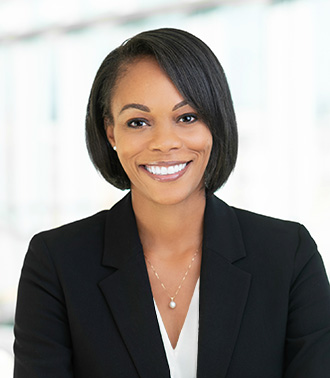
Key Contacts




Related Services
Recognition
-
Chambers USAFood & Beverages: Regulatory and Litigation (Nationwide) (2023)
Retail (Nationwide) (2023)
Advertising: Transactional and Regulatory (Nationwide) (2023)
Product Liability & Mass Tort: The Elite (Nationwide) (2023)
Product Liability: Regulatory (Nationwide) (2023)
Intellectual Property (Nationwide) (2023)
Intellectual Property: Trademark, Copyright & Trade Secrets (Nationwide; Washington, D.C.; New York) (2023)
Intellectual Property: Litigation (Washington, D.C.) (2023)
Intellectual Property: Patent (New York) (2023)
Corporate/M&A and Private Equity – Washington, D.C. (2022-2023)
Corporate/M&A: Highly Regarded – Nationwide, New York, California: San Francisco, Silicon Valley & Surro (2022-2023)
Litigation: General Commercial: (Colorado, Illinois, New York) (2023)
Highly Regarded (New York) (2023)
Litigation: General Commercial: The Elite (D.C.) (2023) -
The Legal 500 USFirms to Watch Advertising and Marketing: Transactional and Regulatory (2023)
Product Liability, Mass Tort and Class Action — Defense: Consumer Products (Including Tobacco) (2023)
Product Liability and Mass Tort Defense: Consumer Products (including tobacco) (2023)
Patent Litigation: Full Coverage (2023)
Patents: Prosecution (including Re-Examination and Post-Grant Proceedings) (2023)
Intellectual Property: Copyright (2023)
Trademarks: Litigation (2023)
Intellectual Property: Trademark, Copyright & Trade Secrets (USA) (2023)
Intellectual Property: Patent (USA) (2023)
M&A: Middle-Market (sub-$500m) (2022)
M&A/Corporate and Commercial: Private Equity Buyouts (2022)
General Commercial Disputes (2023) -
Benchmark LitigationRecommended – Dispute Resolution — California; New York (2024)
Highly Recommended – Dispute Resolution — District of Columbia (2024) -
Best Law FirmsAdvertising Law – Colorado (2024)
Litigation - Intellectual Property – Chicago; Colorado; National; Washington, D.C.; New York; San Francisco (2024)
Litigation - Patent – Chicago, National, Los Angeles (2024)
Trademark – National, New York, Los Angeles (2024)
Copyright – National, New York (2024)
Corporate Law – National, Colorado, Washington, D.C., Los Angeles, New York, San Francisco) (2024)
Commercial Litigation – National, Colorado, Chicago, Houston, Washington, D.C., New York, San Francisco (2024)
Bet-the-Company Litigation – Chicago, Colorado, San Francisco (2024)
Mass Tort Litigation/Class Actions – Defendant—National, New York (2024)
Product Liability Litigation - Defendants (2024) -
BTI Consulting GroupClass Action Leaders (2024)
Most Feared in Litigation (2023)
